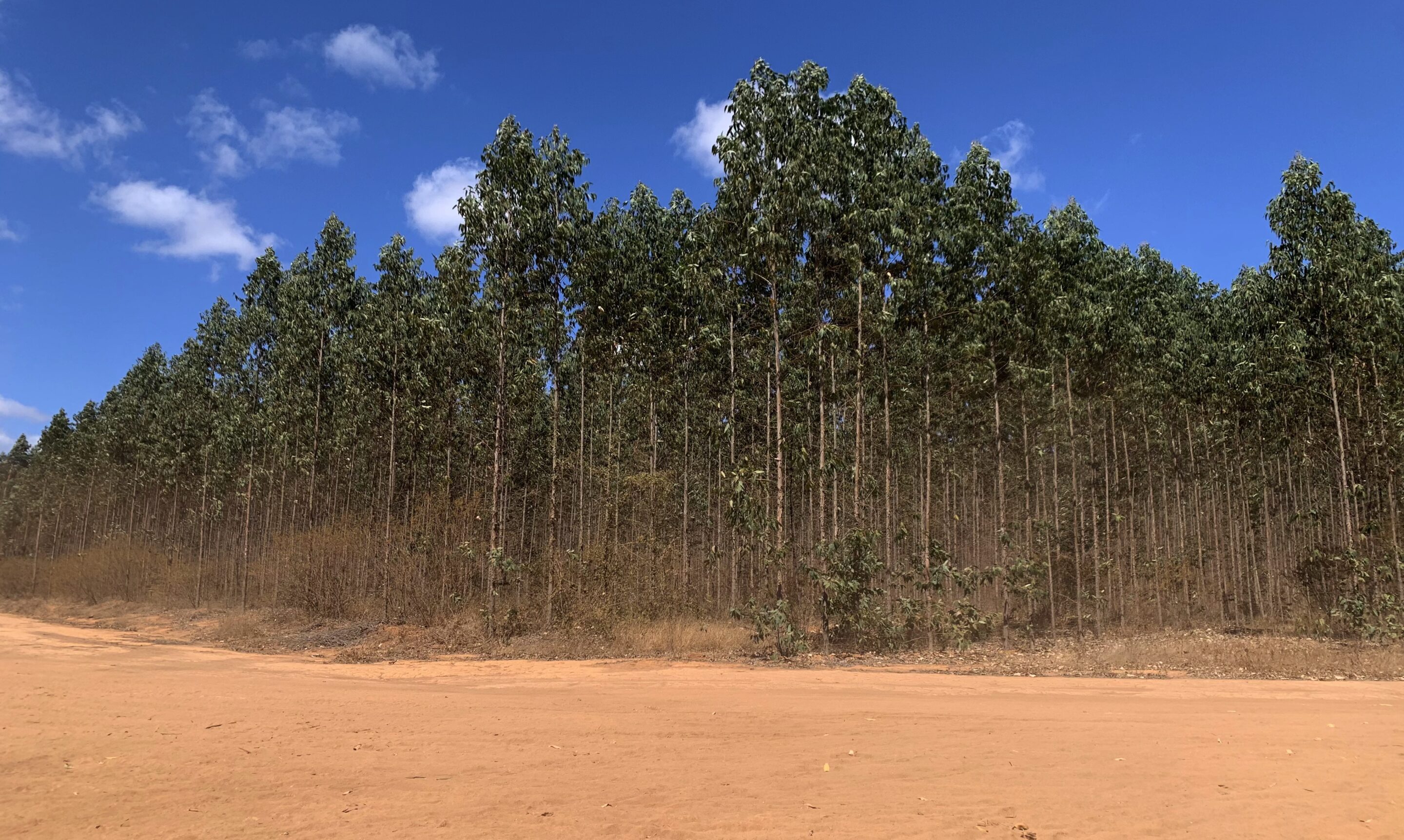

- Lead to land grabbing and rights abuses for local communities
- Compete with land used to grow food, which deepens the poverty of local communities
- Have gender-differentiated impacts and harm women most
- Deplete native diversity
- Reduce biodiversity
- Deprive people of their cultural integrity
- Deplete freshwater resources
- Cause soil erosion and reduce soil fertility
- Pollute soil and water because of the chemicals used
- Are a source of carbon emissions when land is cleared for plantations
- Are less carbon-rich than the natural ecosystems they replace, thereby depleting carbon storage and limiting carbon sink possibilities
- Increase the risk of fire, pests, and disease due to unnaturally high biomass production
- Are invasive and spread into the surrounding areas
- Calls on African governments to stop using the AFR100 project to expand monoculture tree plantations in Africa
- Calls on all African people to resist the further exploitation, fragmentation and degradation of the remaining natural forest landscape for monoculture plantations of exotic species
- Opposes the expansion of the industrial monoculture tree plantation model based on a single species for maximum biomass production
- Calls for a ban on new large-scale plantations in Africa