

By Natalie McClure, Isaac Millians and Amy Guzman. Undergraduate Researchers at Gibson Climate Justice Lab, University of Southern California
Brazil’s Expanding “Green Deserts”
Picture a desert: hot, dry, and teeming with drought-resistant life. Now, think about what color it is – probably yellow, brown, or red. Nothing resembling fields of green.
In Brazil, so-called “green deserts” have been expanding across the country, bringing the same water scarcity and biodiversity loss associated with traditional deserts. Unlike traditional dry deserts defined by the absence of trees, green deserts are defined by their presence – namely, the presence of fast-growing non-native eucalyptus.
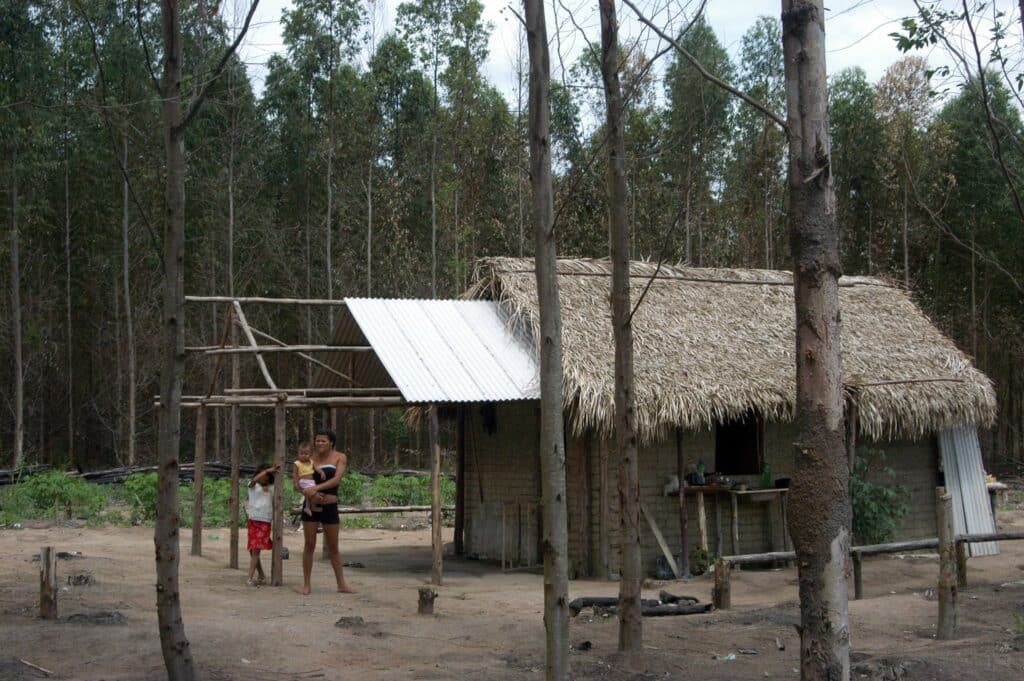
Brazil produces more eucalyptus than any other country, primarily for timber and pulp harvest. Suzano sits at the center of this expansion. The self-proclaimed “largest pulp manufacturer in the world” is at the top of the industry and a proud actor in the Brazilian timber market. Its new megaplant in Ribas do Rio Pardo, Mato Grosso do Sul–opened with the blessing of President Luiz Inácio Lula da Silva–is one of the largest industrial pulp facilities on Earth. As plantations grow, so do reports of depleted national water reserves, increased deforestation of native forests, loss of Indigenous and traditional territories, agrotoxin contamination, and escalating conflicts with indigenous communities.
Now, Suzano is adding genetically engineered (GE) eucalyptus to this already destructive model.
GE Eucalyptus and a New “Carbon Colonialism”
GE eucalyptus is being marketed as the next frontier of “carbon dioxide removal.” These trees are engineered for traits such as accelerated growth or delayed decomposition and are framed as climate solutions despite ecological and scientific uncertainties. They represent land-based geoengineering with consequences for forests, water systems, biodiversity, and Indigenous Peoples.
Suzano’s biotech subsidiary FuturaGene is pairing industrial forestry with synthetic biology to market plantations as carbon assets. The result is two extractive agendas: carbon offsetting and biotechnology expansion, which mask the social and ecological harms.
Despite a de facto moratorium under the UN Convention on Biological Diversity, Brazil has emerged as a major testing ground for genetically engineered trees. Transgenic material in GE eucalyptus refers to genetic sequences artificially inserted to confer traits such as faster growth, herbicide tolerance, insect resistance, and altered wood composition. FuturaGene has developed multiple strains, including:
Both of these strains pose significant ecological challenges: faster-growing trees demand more water, and herbicide-tolerant trees increase pesticide use and chemical drift, all of which harm workers, local communities, soils, and pollinators. Unlike annual crops, GE trees may reproduce, spread pollen, and persist for decades, making them impossible to recall once introduced into the wild. Failures seen in GE crops could be magnified in long-lived tree species.
Regulatory Gaps and FSC Contradictions
Hundreds of NGOs and Indigenous Peoples’ Organizations through the Campaign to STOP GE Trees have urged national bodies and international authorities to impose moratoria and close regulatory gaps.
The Forest Stewardship Council (FSC) prohibits the commercial use of GE trees. Although Suzano is certified under the FSC,FuturaGene has moved forward with deploying GE test plots in Brazil.
Four field trials have been installed across Bahia, Maranhão, and São Paulo. Sites have remained under-regulated, with little public-facing data on gene flow, soil health, and impacts on water systems.
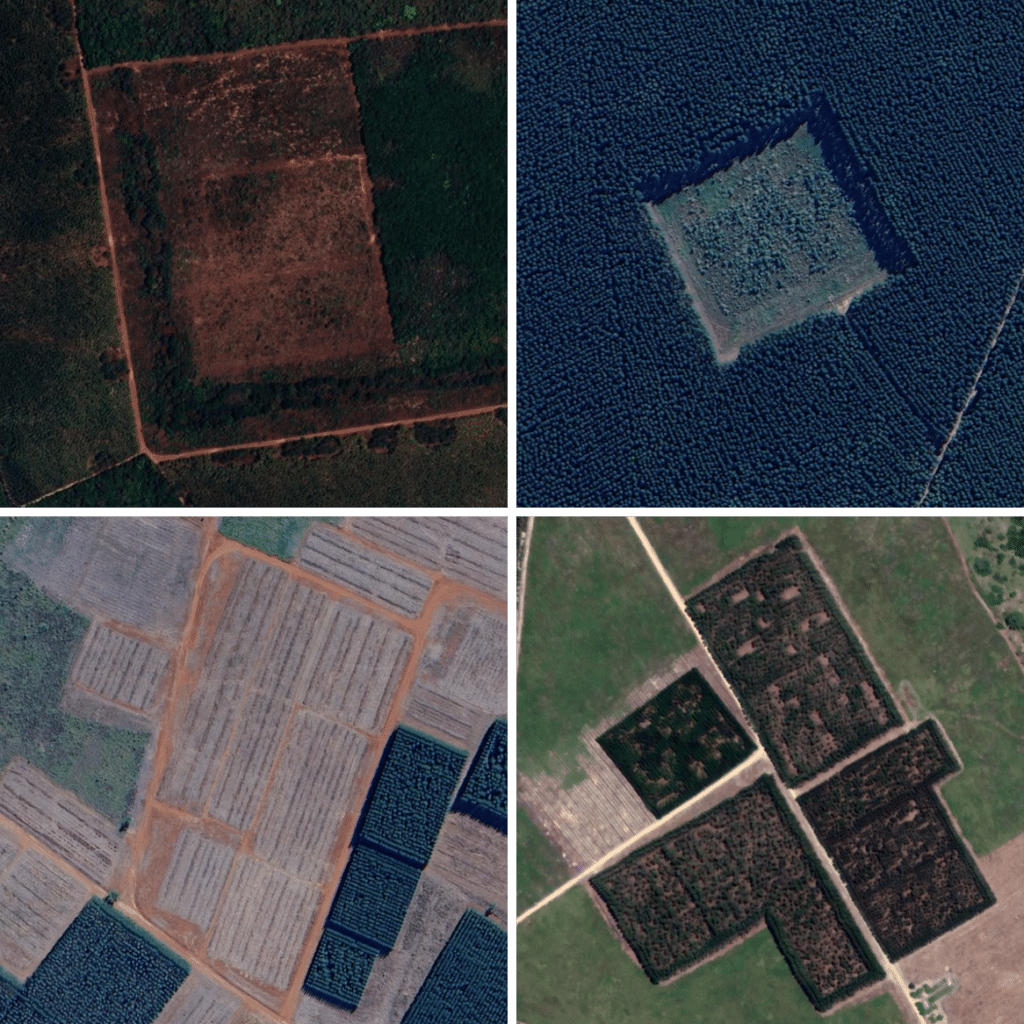
Loosely regulated reporting makes the sustainability of these H421 plots appear more favorable at five years post-commercial approval. This procedural narrative of “success” obscures the absence of ecological data and falsely furthers the transition towards commercial readiness. The DH3229 clone, promoted as superior to H421, raises additional concerns for glyphosate exposure and drift, exacerbating the tension between national biosafety procedures and international sustainability projects.
Private biotech patents increasingly dictate what constitutes “permission” on a global scale. The patent system in Brazil allows biotechnology corporate actors to claim ownership of engineered genotypes, blurring the distinction between regulatory approval and proprietary control. Ecosystems are made vulnerable to unilateral technology experiments, such as those of the partnered FuturaGene and Suzano, which become a false idol for climate mitigation.
Carbon Markets are Fueling GE Plantation Expansion
Carbon markets have evolved from the Kyoto Protocol’s offset mechanisms into a patchwork of voluntary and compliance schemes. Under the Paris Agreement, Article 6.4 creates a new global carbon crediting mechanism meant to replace Kyoto’s program. Countries and companies can now generate, trade, and purchase carbon credits under a unified set of rules—though issues of non-additionality, land grabs, and accounting loopholes persist.
Brazil plans to launch a national carbon market by the end of the decade, designed to interface with Article 6.4. This alignment is shaping land policy and corporate behavior, including plantation projects framed as “carbon removal.”
These developments build on the legacy of the UN’s REDD and REDD+ (Reducing Emissions from Deforestation and Forest Degradation) programs, earlier attempts to channel carbon finance into forest conservation by treating forests as carbon assets. Suzano is already positioning itself to profit from this system. They boast two projects: the Carbon Horizon Project and the Cerrado Carbon Project, both framed as forest protection. Suzano’s claim to “promote reforestation in an integrated landscape” conflicts with eucalyptus’s exotic status and incompatibility with the Cerrado. Suzano’s pulp mill in Mato Grosso do Sul is expanding eucalyptus plantations into cerrado forest, declaring land “degraded” to justify industrial conversion.
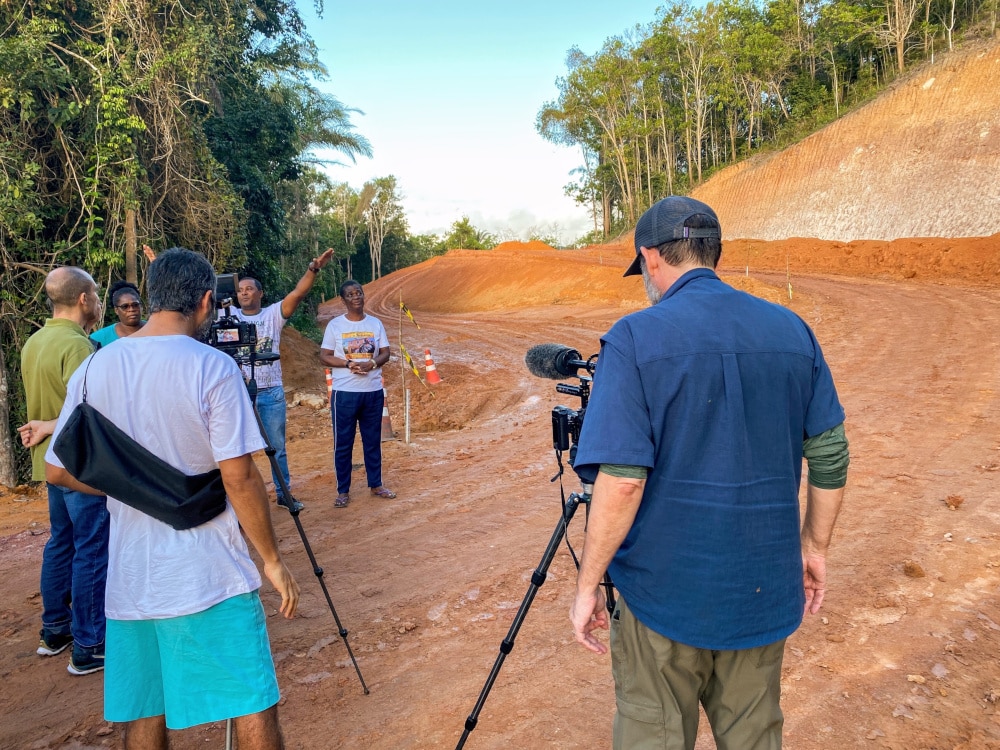
Meanwhile, Verra—the non-profit that accredits carbon offset programs for REDD+, including Suzano’s—has been embroiled in a slew of scandals. Verra has been accused of accrediting companies engaged in illegal deforestation and land grabs, leading to the suspension of all Verra projects in Brazil. Although the suspension has ended, the Cerrado Carbon Project is listed on Suzano’s website as “currently inactive due to the developer’s strategic redefinition.” For those familiar with Suzano’s own history with unauthorized activity and violations of indigenous rights, this comes as no surprise.
Suzano Sustainability Messaging and the Tropical Forest Forever Facility
Brazil is set to have its own regulated carbon market, making internal review unlikely as the program finds its footing. Brazil may seek any available sources of carbon credits, bolstered by the Tropical Forest Forever Facility (TFFF). TFFF aims to compensate tropical forest companies for each hectare of standing forest maintained. Fire-related forest degradation and deforestation reduce payments. The $125 billion target could be the largest blended finance mechanism of its kind.
The TFFF’s latest Concept Note promises to exclude monoculture plantations in its payments, but how it approaches so-called “integrated landscapes” like Suzano’s Cerrado Carbon Project remains to be seen.
Civil Society is Fighting Against Displacement and Destruction
Brazilian social movements have long challenged the agribusiness model. Groups like La Vía Campesina, the Landless Workers’ Movement (MST), and the Brazilian Forum to Combat Agrotoxins are pushing back against monoculture plantations for displacing rural communities, driving chemical exposure, and undermining food sovereignty.
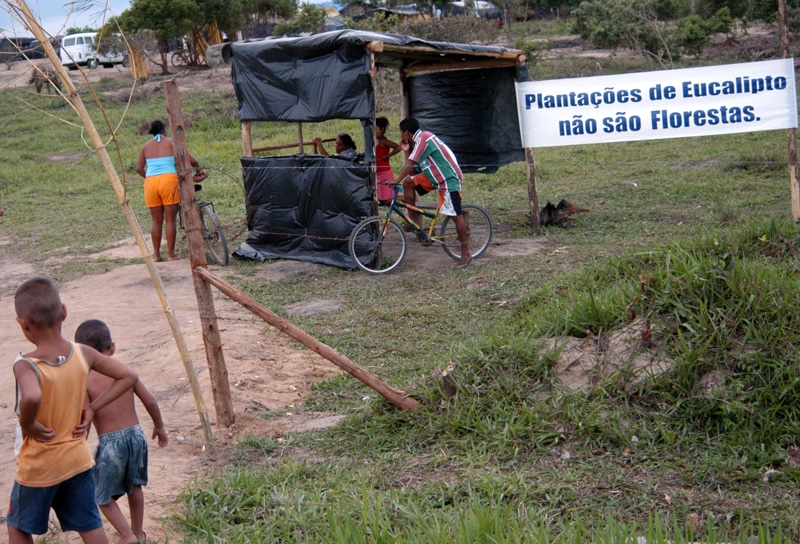
Resistance to GE eucalyptus has become a focal point of this struggle. Protests unite Indigenous Peoples, rural women, laborers, academics, and international networks who argue that GE tree plantations perpetuate a form of chemical and carbon colonialism. At universities and public forums, such as the 4th University Conference in Defence of Agrarian Reform (JURA), activists draw attention to pesticide contamination, the loss of traditional territories, and the widening gap between corporate sustainability rhetoric and the lived impacts on communities.
Indigenous communities have acted directly. In 2022, Pataxó groups reclaimed sections of Suzano’s plantations inside the legally recognized Comexatibá Indigenous Territory in Bahia, denouncing efforts to block land demarcation. MST has led some of the most high-profile protests, including the 2015 occupation of FuturaGene’s GE tree greenhouse and demonstrations that shut down CTNBio meetings. During this year’s Red April mobilizations, MST emphasized agrarian reform as essential to confronting food insecurity and the ecological harms of industrial monoculture. Quilombola communities have also secured important victories. The Superior Court of Justice recently overturned a ruling that allowed Suzano to seize Quilombo Itaúna’s territory—a significant moment in ongoing struggles for land rights and cultural survival.
Brazil as the Model for Global Land-Based Geoengineering
Brazil’s GE eucalyptus plantations serve as a warning for global carbon markets amid the high-stakes risks of land-based geoengineering. These plantations reveal the same structural vulnerabilities that could accompany other land-based climate interventions worldwide: regulatory gaps, corporate control over ecosystems, and the masking of ecological harms under the guise of climate solutions. The concern now, and always, is protecting biodiverse ecosystems and the rights of communities that protect and rely on them.


